Germany, renowned for its rich history and cultural traditions, transforms into a winter wonderland during the festive season. The country’s Christmas markets are renowned worldwide, each with its unique charm and offerings. In this exploration, we’ll delve into the enchanting Christmas markets of Aachen, Berlin, Cologne, Dresden, Erfurt, Frankfurt, Nuremberg, and Stuttgart, discovering the magic that captivates millions of visitors each December.
Table of Contents
Quick Comparison of Germany’s Top Christmas Markets
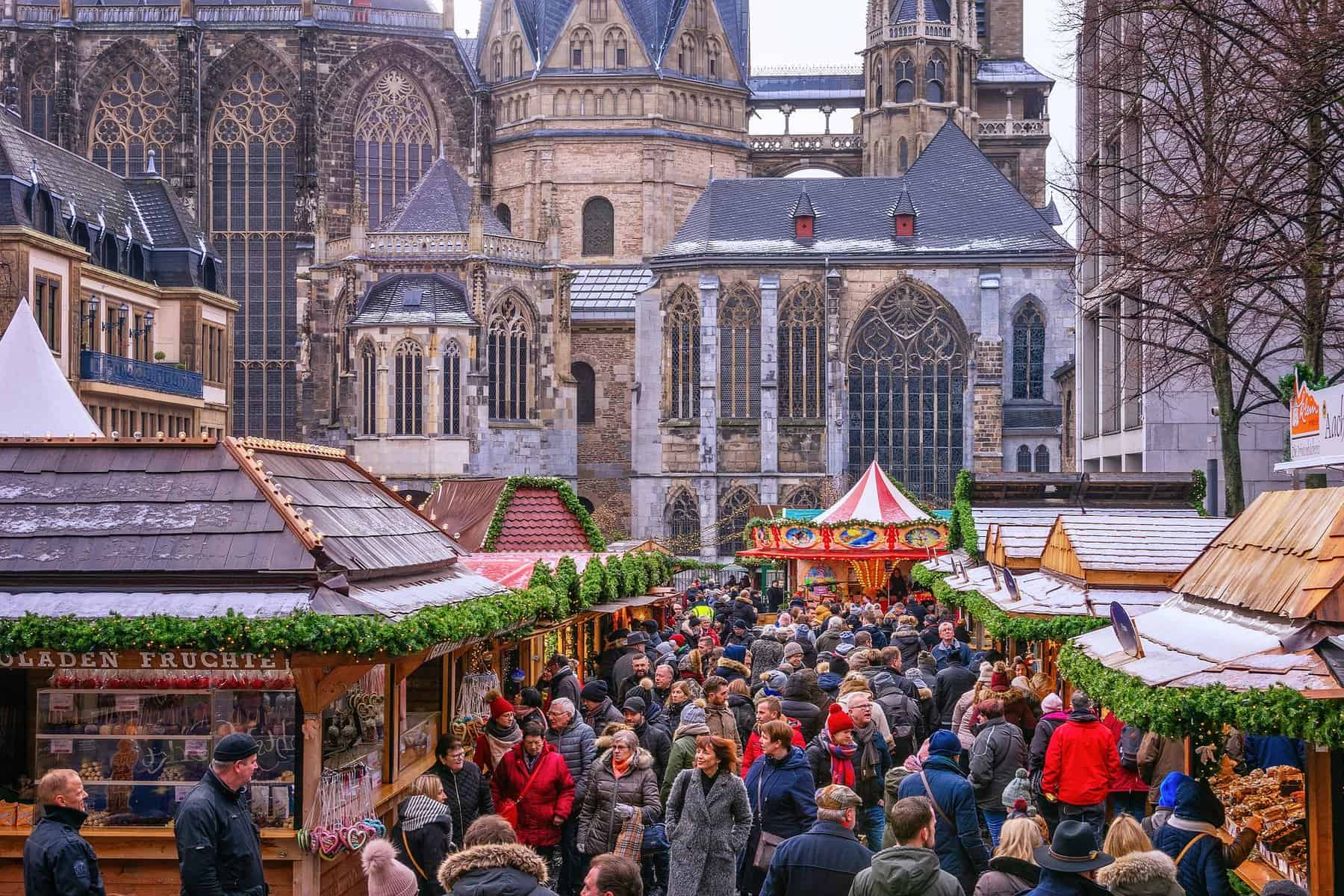
As the holiday season descends upon Aachen, the air is filled with a magical fervor. The iconic Cathedral serves as the backdrop for a European Christmas Market that captivates visitors of all ages. With vibrant colors, twinkling lights, and nearly 1.5 million annual guests, Aachen’s festive atmosphere is truly one-of-a-kind. From handmade crafts to traditional treats like potato fritters and Mulled Wine, Aachen is a cherished destination for winter celebrations.
Bamberg – UNESCO World Heritage Charm
With its colorful timbered houses, medieval streets, and stunning setting on the Regnitz River, Bamberg is one of Germany’s most photogenic cities and is listed as a UNESCO World Heritage Site for its medieval streets and historic buildings.
While there’s just one main market here, it’s a cozy, traditional one that captures everything magical about small-town Christmas in Germany.
What Makes It Special:
The Bamberg Christmas Market has GREAT food – the food and drinks options went above and beyond in terms of quality with dishes served piping hot and tasting incredible
A large Franconian half-timber nativity scene depicting various scenes from the Christmas story
Krippenweg (Nativity Trail) – more than 30 nativity scenes are placed around Bamberg’s old town each Advent season, ranging from traditional to modern interpretations
The Altes Rathaus (Old Town Hall) set on a tiny island in the middle of the river is one of the most photogenic buildings in Germany
When to Visit: Bamberg dates: November 25 to December 23, 2025
Location: Maximiliansplatz, open Monday to Thursday: 9:30am to 8pm, Friday and Saturday: 9:30am to 9pm, Sunday: 11am to 8pm
Berlin, Germany
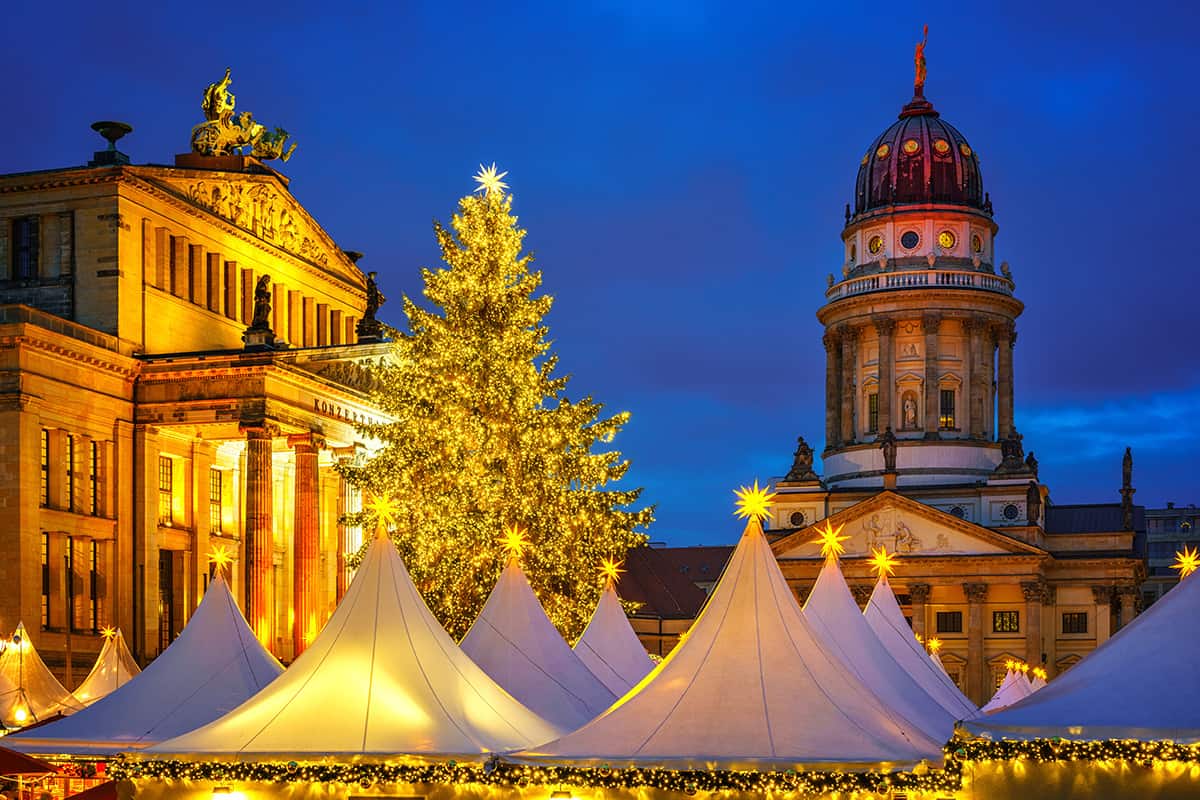
From Gendarmenmarkt’s classic ambiance to Berliner Weihnachtszeit am Roten Rathaus’ lively atmosphere, Berlin’s Christmas markets offer an unforgettable experience. These festive gatherings, rooted in centuries-old traditions, create lasting memories for both locals and travelers. Join the four weeks of advent for a magical journey, where the markets provide more than just presents under the tree in December.
Cologne, Germany
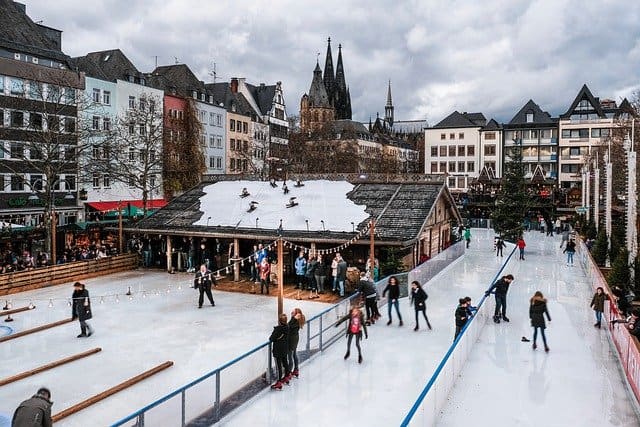
Set against the backdrop of Cologne’s signature cathedral, the Christmas market offers a delightful blend of shopping and scenic beauty. Fairy lights create a starry sky ambiance overhead, and a dedicated section for Christmas treats makes this market a culinary delight. Families can explore Nikolausdorf (Saint Nicholas Village), immersing children in the true spirit of Christmas.
Dresden, Germany
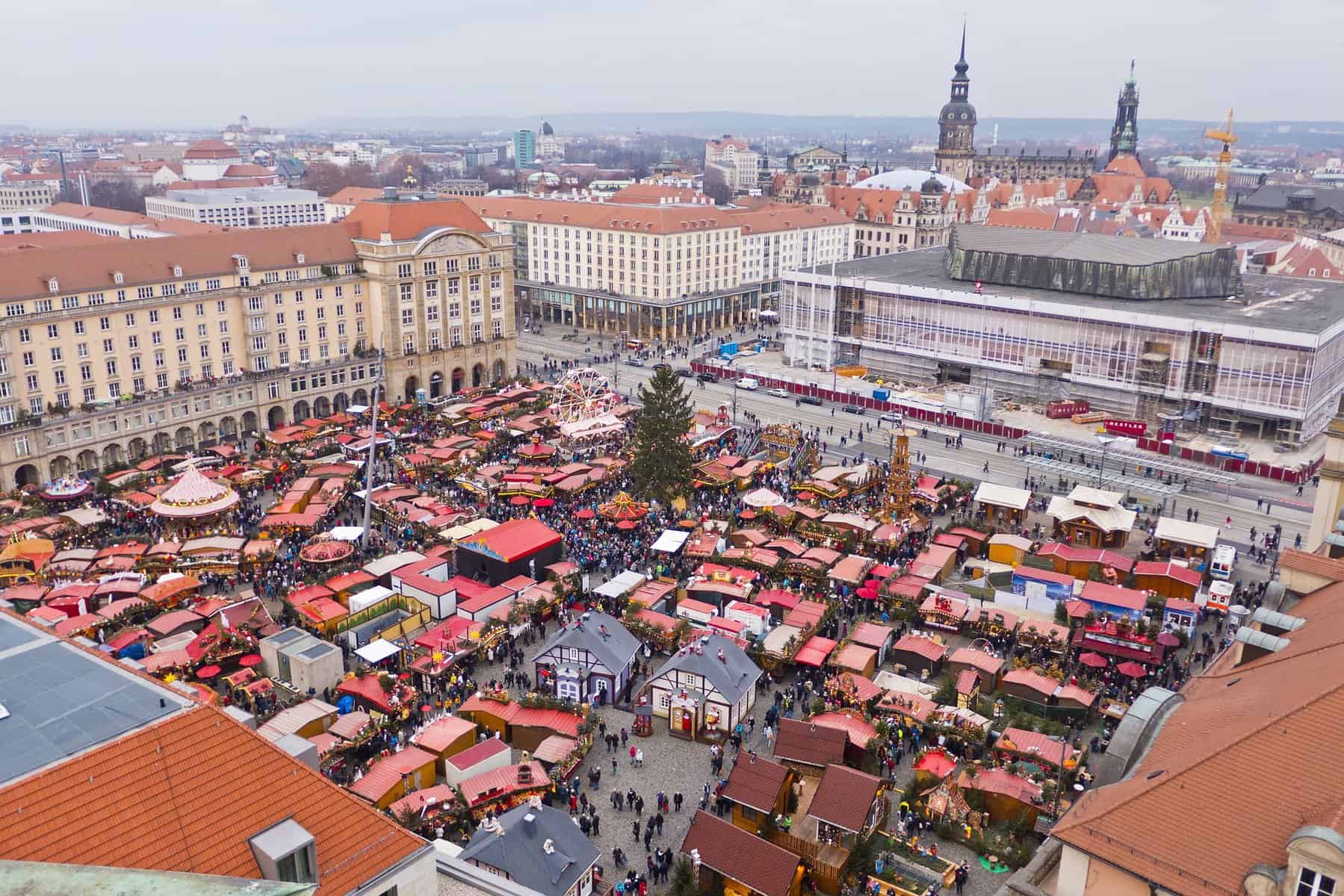
Dresden’s Striezelmarkt, dating back to the 15th century, stands as the oldest Christmas market in Germany. Nestled in Altmarkt Square, it showcases the region’s rich history in crafting authentic Christmas gifts and décor. With themes ranging from Christmas pyramids to blown glass tree decorations, the market is a treasure trove of traditional handicrafts and gastronomy.
Erfurt, Germany
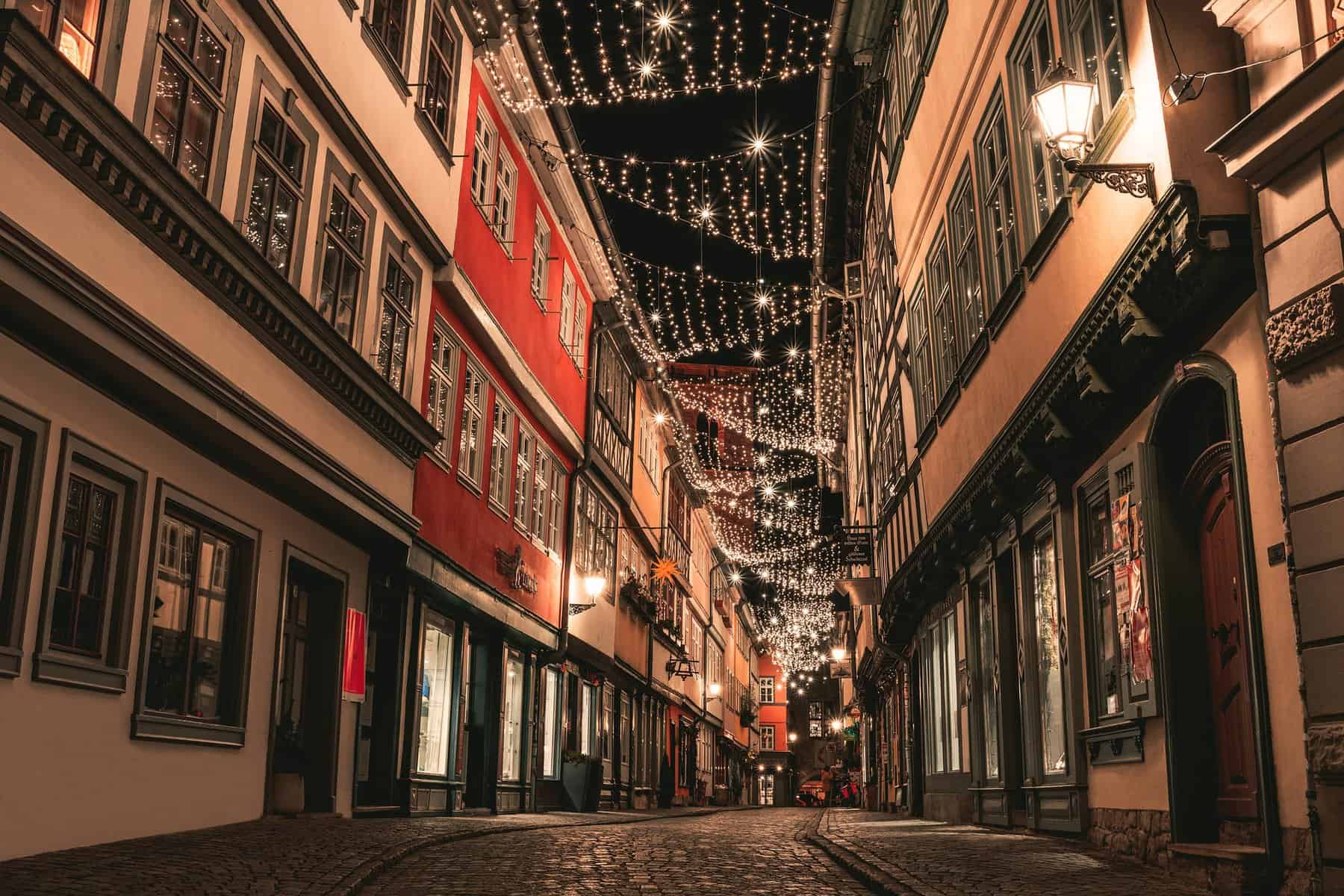
Erfurt’s Christmas market, the largest in Thuringia, transports visitors to a romantic holiday environment in its historic old town. Adorned with a 25-meter-tall Christmas tree and a traditional Christmas pyramid, the market exudes a magical atmosphere. Around 200 wooden huts offer traditional treats and handmade crafts, accompanied by the seasonal aromas of glühwein and Thuringian bratwurst.
Frankfurt, Germany
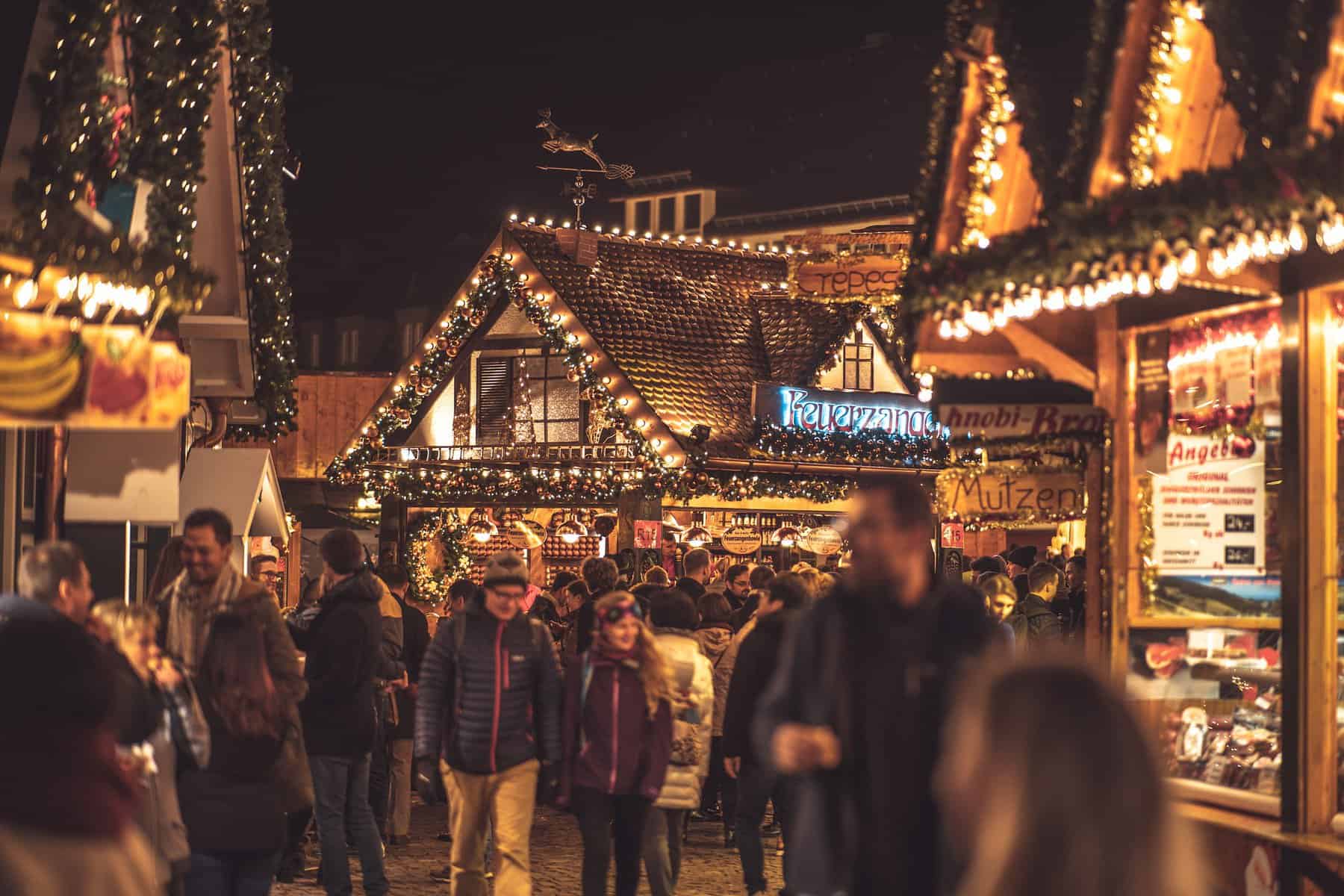
With over 600 years of history, the Frankfurt Christmas Market stands as one of the oldest and best in Europe. Immerse yourself in a bygone era as you stroll through masterfully adorned stalls offering arts, crafts, and seasonal delights. From freshly baked sweets to spicy gingerbread and glühwein, the market exudes the enchantment of Christmas. Entertainment options include concerts, Christmas plays, guided tours, and seasonal storytelling.
Heidelberg – Six Festive Squares
One of Germany’s most beautiful Christmas markets, spread across six squares in Heidelberg’s historic old town, featuring over 140 festively decorated wooden stalls, traditional crafts, and the iconic backdrop of Heidelberg Castle.
The Six Market Locations:
Universitätsplatz: The largest market in Heidelberg, perfect for shopping with beautiful light-up paper stars, beeswax candles, sheepskin rugs and slippers, and wooden figurines
Marktplatz: Features a giant wooden wine barrel with Perkeo, the symbol of Heidelberg, perched on top
Karlsplatz: Framed by the romantic castle backdrop, one of the most beautiful ice rinks in Germany
Kornmarkt: The ‘Winterwäldchen’ (Winter Forest) with 100 illuminated fir trees
Anatomiegarten: Festively decorated huts in front of the monument to chemist Robert Bunsen
Bismarckplatz: The entrance to the old town setting the mood for the market experience
What Makes It Special:
Dampfnudel – a slightly sweet, slightly salty, puffy crispy-edged treat like a dumpling and a pancake with a hint of saltiness smothered in sweet vanilla sauce, a local treat you won’t want to miss
Local wines served in the walk-in Heidelberg Barrel in the heart of wine country
The market uses a sustainable energy concept with LED lighting and runs on green electricity
When to Visit: Heidelberg Christmas Market: November 24 – December 22, 2025, Sunday – Friday 11 a.m. – 9 p.m., Saturday 11 a.m. – 10 p.m.
Munich – Christkindlmarkt at Marienplatz
The largest and oldest Christmas market in Munich was first documented in 1310, making it one of the oldest Christmas markets in the German-speaking world, and now has around 140 market stands with around three million visitors every year.
When darkness falls and the snow on the roofs of the market stalls glows in the bright light of countless lights, Munich’s Christmas market on Marienplatz is at its most beautiful, with nearly 4,000 lights on the large Christmas tree.
What Makes It Special:
Germany’s largest nativity market (Kripperlmarkt) in front of St. Peter’s
‘Singing under the Christmas tree’ every Wednesday at 4:30 p.m., where musicians invite you to join them for half an hour of singing Advent and Christmas carols
The “Himmelswerkstatt” (Heaven’s Workshop) where children between ages six and twelve can dress up as little angels and make Christmas decorations
The almost 30-meter-high Christmas tree in front of the town hall, with around 2,500 lights, is donated every year by a different town from Austria or Italy
Multiple Markets: Munich has more than 30 different Christmas markets throughout the city, including specialty markets like the Christmas Village at the Munich Residenz Palace and markets at Viktualienmarkt, Sendlinger Tor, and more.
When to Visit: The Munich Christkindlmarkt at Marienplatz takes place from Monday, November 24 to Wednesday, December 24, 2025
Traditional German Christmas Market Foods & Drinks
Regional Christmas Foods You Must Try
Beyond the traditional glühwein (mulled wine) and bratwurst found at every German Christmas market, each region offers its own specialties:
Bavaria (Munich, Nuremberg, Bamberg, Regensburg):
Lebkuchen: Nuremberg’s famous gingerbread cookies
Dampfnudel: Sweet yeast dumplings with vanilla sauce (Heidelberg specialty)
Gebrannte Mandeln: Candied almonds found everywhere
Käsespätzle: Thick egg noodles with cheese
Franconia (Rothenburg, Bamberg):
Franconian Bratwurst: Regional sausage style
White Mulled Wine: Sweeter version made with white wine
Regensburger Wurst: Lightly smoked pork sausage
Baden-Württemberg (Stuttgart, Heidelberg):
Maultaschen: Large German pasta pockets
Flammkuchen: Traditional German flatbread like thin-crust pizza
Local wines: From Germany’s wine country
Food/Drink Item
Description
Where to Find
Mulled Wine (Glühwein)
Warm spiced wine, a staple at every market
Aachen, Erfurt, Frankfurt, Nuremberg, Stuttgart
Potato Fritters
Traditional fried potato treat
Aachen
Nuremberg Gingerbread
Famous spicy gingerbread cookies
Nuremberg, Frankfurt
Thuringian Bratwurst
Regional grilled sausage specialty
Erfurt, Stuttgart
Käsespätzle
Cheese-covered egg noodles
Stuttgart
Freshly Baked Sweets
Various seasonal pastries and treats
Frankfurt, multiple markets
Nuremberg, Germany
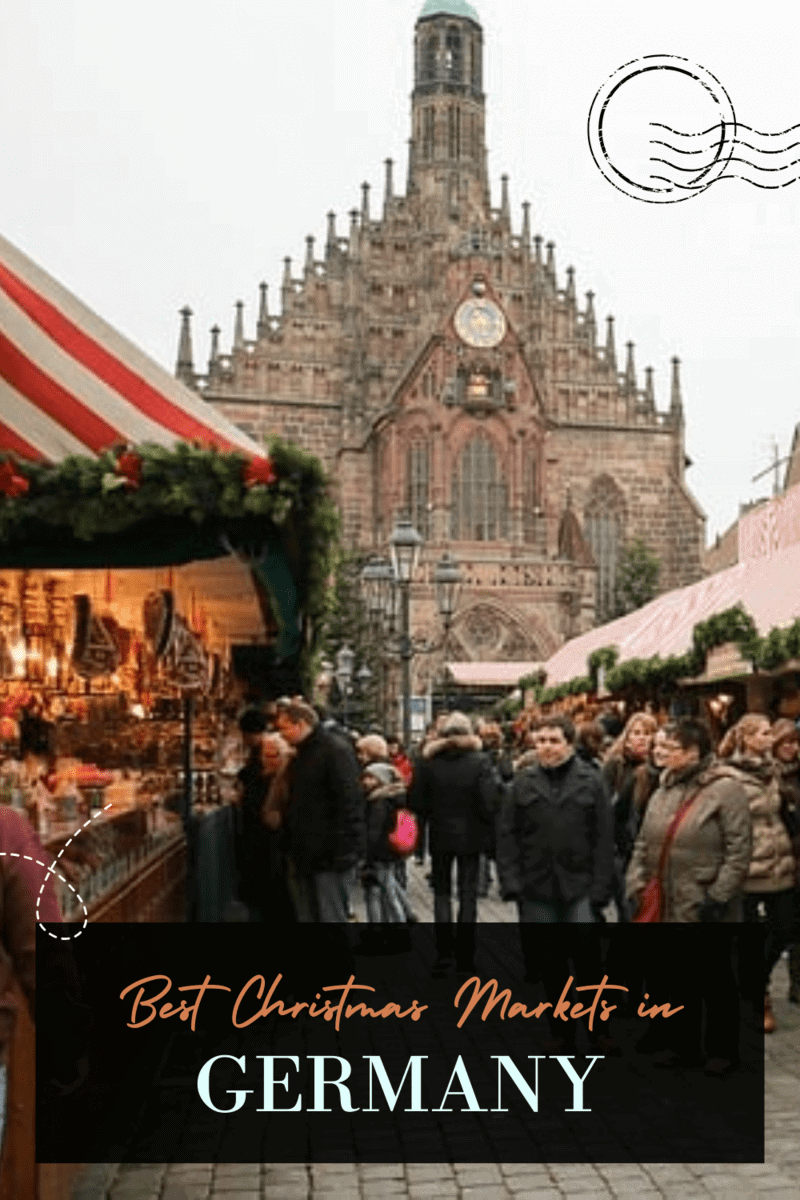
Nuremberg’s Christkindlmarket, one of the largest and most famous in Germany, promises a magical experience for the whole family. Charming stalls, adorned with traditional gifts and toys, offer delicious home-cooked treats like the famous Nuremberg gingerbread. As the sun sets, the market comes alive with singing and communal warmth around vast cauldrons of Glühwein. Don’t miss the Children’s Christmas Market and the Market of the Sister Cities for unique gifts from around the world.
Regensburg – Four Magical Markets
The Regensburg Christmas Market is rightly considered one of the most beautiful Advent markets in Germany and was voted number 1 in a Facebook poll as the most popular in Bavaria. It is listed as a UNESCO World Heritage Site for its historic architecture, and is the largest medieval city north of the Alps.
There are four main Christmas markets in Regensburg, with the two largest being located at Neupfarrplatz and at the Palace of Thurn und Taxis.
The Romantic Christmas Market at Thurn und Taxis Palace: This market wraps around the St. Emmeram Palace, making it the largest market in Regensburg and one of the largest markets in Germany. It is one of the few markets in Germany where you must purchase a ticket.
What Makes It Special:
Regional specialties such as blueberry mulled wine from the Bavarian Forest or apple mulled wine from Upper Palatinate orchards, plus “Original Regensburger Bratwürste”
The legendary Regensburger sausage served in a crusty roll with sauerkraut or mustard, paired with fruit mulled wines like blueberry or apple
The uniquely beautiful location at the foot of the Stone Bridge with the incomparable view of Regensburg Cathedral
When to Visit: The main Regensburg Christmas Market runs from November 25 to December 23
Rothenburg ob der Tauber – The Reiterlesmarkt
One of the most popular Advent markets in Germany, the Reiterlesmarkt is considered one of the most attractive Christmas markets in the country, nestled in the picturesque setting between the town hall and St. Jakob. Once a year, the medieval town of Rothenburg ob der Tauber transforms itself into a fairytale winter wonderland, and ever since the 15th century, the festive time prior to Christmas has been accompanied by a delightful Christmas market.
At the end of November, over 60 stalls are set up on and around Marktplatz, the main market square, with the backdrop of the Rathaus (the town hall), the Ratstrinkstube Clock Tower, the Herterich Fountain, and numerous pastel-colored buildings.
What Makes It Special:
Enjoy old-fashioned German Christmas cookies, hot white mulled wine (Franconian specialty), arts and crafts, and the night watchman
Half-meter sausages served in a round bun (delicious and fun to eat!)
Schneeballen (deep-fried pastry balls) considered Rothenburg ob der Tauber’s signature dish
Home to Käthe Wohlfahrt’s flagship store – the famous German company that sells Christmas ornaments and decorations
When to Visit: The market runs from November 21 to December 23, 2025 (closed on Remembrance Sunday, November 23, 2025)
Insider Tip: Try the Franconian white mulled wine, which is a little sweeter and more unique in flavour, and don’t miss the evening tour with the night watchman for an unforgettable way to experience the town’s history.
Stuttgart, Germany
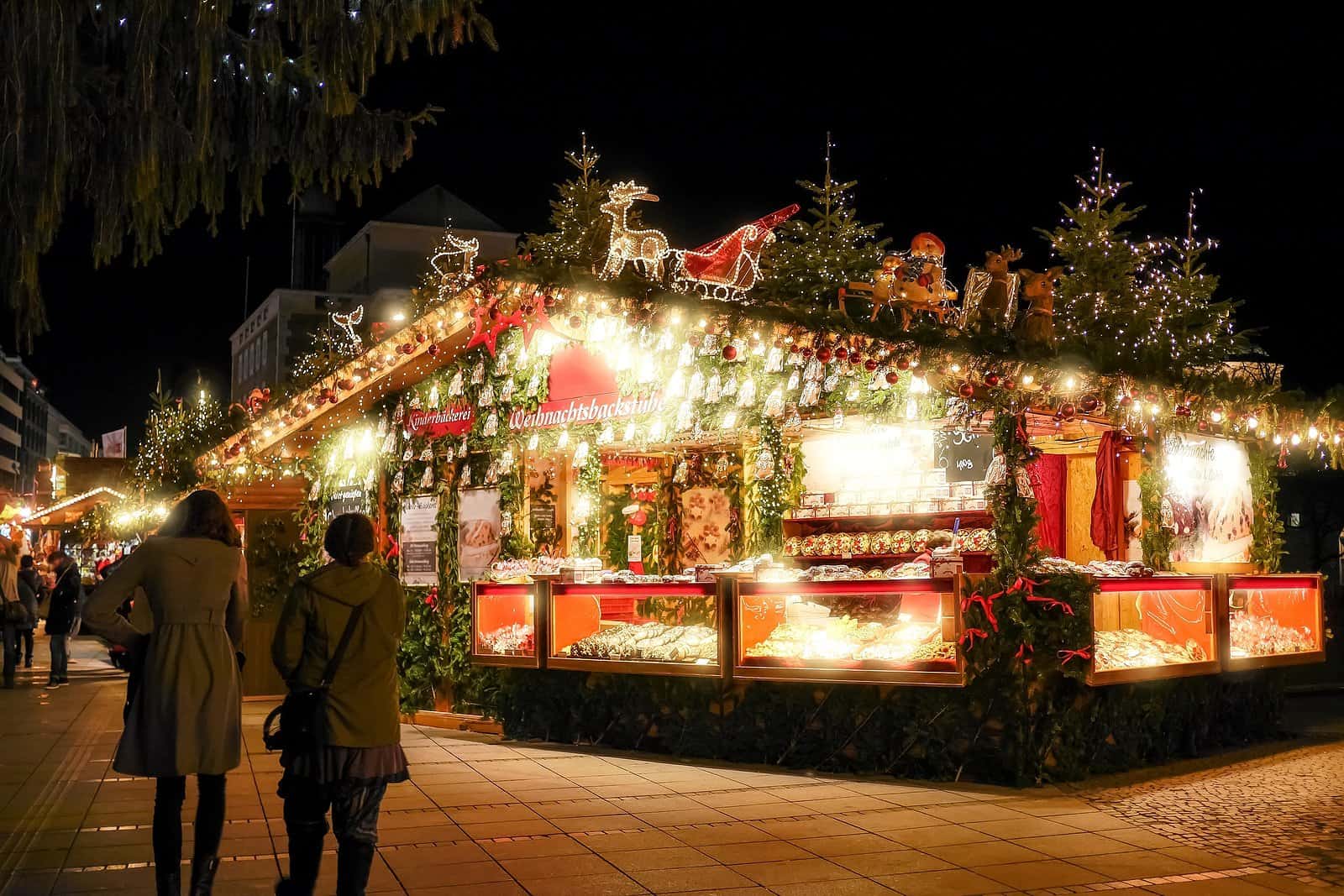
Stuttgart’s Weihnachtsmarkt, one of the oldest and largest in Germany, sprawls across the city, offering a diverse range of attractions. Wooden houses near the Rathaus showcase local gifts, bakery items, and a unique advent calendar. An ice rink, a small steam train, and festive rides add to the family-friendly atmosphere. Traditional German foods like bratwurst and Kasespatzle, along with warm mulled wine, create a festive culinary experience against the backdrop of glittering Christmas lights.
Unique Attractions at Each Christmas Market
City
Special Attractions
Family-Friendly Features
Aachen
Cathedral backdrop, handmade crafts
Vibrant colors and twinkling lights
Berlin
Gendarmenmarkt classic ambiance, Berliner Weihnachtszeit
Four weeks of advent activities
Cologne
Fairy lights creating starry sky, cathedral views
Nikolausdorf (Saint Nicholas Village) for children
Dresden
Christmas pyramids, blown glass tree decorations
Traditional handicrafts demonstrations
Erfurt
25-meter Christmas tree, traditional Christmas pyramid
200 wooden huts with handmade crafts
Frankfurt
Concerts, Christmas plays, guided tours
Seasonal storytelling
Nuremberg
Market of Sister Cities with international gifts
Dedicated Children’s Christmas Market
Stuttgart
Advent calendar, glittering Christmas lights
Ice rink, small steam train, festive rides
Planning Your German Christmas Market Trip
Best Time to Visit: The first Sunday of Advent in 2025 is 30 November, and many Christmas markets start the Friday before the first Sunday of Advent – that is, on Friday 28 November in 2025. Germany’s Christmas markets usually start around November 20-25 or so, and the final date is almost always December 23, as Germans celebrate Christmas on December 24.
Getting Around:
Most German cities have excellent public transportation
Train travel between cities is efficient and scenic
Consider purchasing a German Rail Pass if visiting multiple cities
Make sure you have comfortable shoes that are well insulated and waterproof – it gets cold in Germany during December with cold streets and wet conditions
Money Matters: Always bring cash! While some stalls accept cards, many Christmas markets in Germany still primarily operate on cash transactions. Most glühwein stalls also require a deposit (pfand) for the collectible mugs.
Avoiding Crowds: Visit markets during weekday afternoons or early mornings for a more relaxed experience. Weekends and evenings tend to be the busiest times.
German Christmas Markets FAQs
What are the typical opening dates for German Christmas markets?
Most German Christmas markets open during the last week of November, typically around the first Sunday of Advent. They usually remain open through December 23rd or Christmas Eve, though some markets stay open until New Year’s Eve. It’s best to check specific market websites for exact dates as they can vary slightly each year.
Are German Christmas markets wheelchair accessible?
Most major German Christmas markets have made efforts to improve accessibility, with paved pathways between stalls and accessible restrooms. However, crowds can make navigation challenging, especially during peak evening hours and weekends. Visiting during weekday mornings typically offers the best accessibility experience.
Do vendors at German Christmas markets accept credit cards?
While larger markets in cities like Berlin and Frankfurt increasingly accept credit cards, many smaller vendors still operate on a cash-only basis. It’s highly recommended to carry euros in cash for your visit. Some markets have ATMs on-site, but they may have long queues during busy periods.
What is the significance of the Christmas market mugs?
When you purchase glühwein or other hot beverages, you pay a deposit (pfand) of €2-5 for the decorative mug. You can either return the mug for your deposit back or keep it as a souvenir, which many visitors do. Each market typically has its own unique mug design that changes annually, making them popular collectibles.
Are pets allowed at German Christmas markets?
Pet policies vary by market, but many German Christmas markets do allow dogs on leashes. However, the crowds, noise, and foot traffic can be stressful for animals. If you do bring your pet, consider visiting during quieter weekday hours and be prepared to keep them close and safe from dropped food items.
What time of day is best to visit German Christmas markets?
Weekday afternoons between 2-5 PM offer a pleasant balance of atmosphere without overwhelming crowds. Evening visits after 6 PM provide the most magical ambiance with full illumination, but expect larger crowds. Weekend mornings are ideal for families with children seeking a calmer experience.
Do I need to book accommodations far in advance for Christmas market visits?
Yes, hotels in cities with popular Christmas markets often book up months in advance, especially for weekends in December. Prices also increase significantly during the Christmas market season. Booking 3-6 months ahead is advisable for the best selection and rates, particularly for markets in Nuremberg, Dresden, and Cologne.
Are there vegetarian and vegan food options at German Christmas markets?
While traditional German Christmas market food is meat-heavy, most markets now offer vegetarian options like käsespätzle, roasted almonds, potato dishes, and mushroom-based foods. Vegan options are becoming more common in larger city markets, including plant-based bratwurst and dairy-free hot chocolate, though selection may still be limited.
Can you ship Christmas market purchases internationally?
Many vendors at German Christmas markets can arrange shipping for delicate items like glass ornaments and larger purchases, though it will be at an additional cost. Alternatively, major cities have post offices nearby where you can ship items yourself. Be sure to pack fragile items carefully, and note that some handcrafted wooden items may be restricted in certain countries.
What should I wear to stay comfortable at an outdoor Christmas market?
Layered clothing is essential since you’ll be outdoors but occasionally near heat sources and in crowded areas. Warm, waterproof boots with good traction are crucial as cobblestones can be slippery. Don’t forget a hat, scarf, and gloves, and consider hand warmers for especially cold days when temperatures can drop below freezing.
Conclusion As we traverse the magical Christmas markets in Germany, from the historic charm of Aachen to the festive fervor of Stuttgart, it becomes evident that these markets are more than just shopping destinations. They are portals to a bygone era, where traditions, crafts, and culinary delights come together to create an enchanting celebration of the holiday season.
Whether it’s the oldest market in Dresden or the bustling streets of Frankfurt, each market adds its unique flavor to the tapestry of Germany’s winter wonderland, making it a must-visit destination for those seeking the true magic of Christmas.
Sommerrodelbahn am Skistadion Garmisch-Partenkirchen is a short drive from Garmisch-Partenkirchen, near Linderhof Castle and an insane amount of fun. Visiting here while…
With each season the Bellagio Hotel and Casino in Las Vegas changes the decorations inside their conservatory, a 14,000-square-foot floral playground. I…